WELCOME TO PREMIER RECRUITMENT AGENCY IN PAKISTAN
LICENSED RECRUITMENT AGENCY · OEP-3351

LINKARABIA / NAVIGATION SEARCH
⌕
LINKARABIA / NAVIGATION INTELLIGENCE
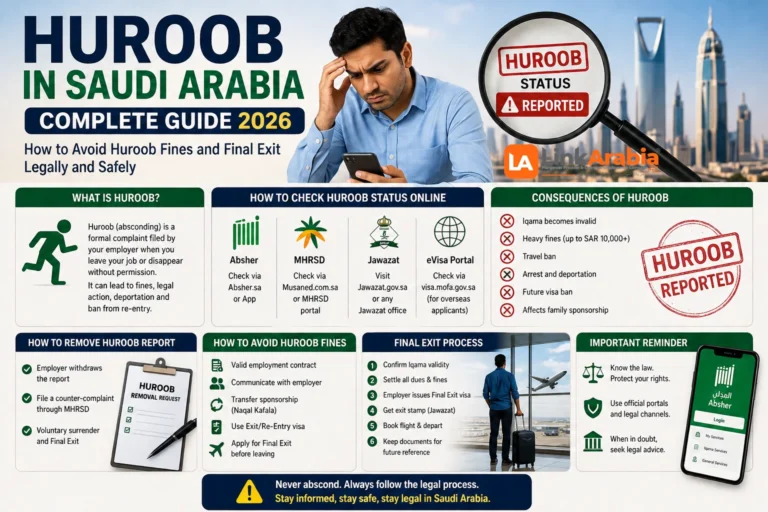
If you are working in Saudi Arabia as an expatriate worker, you must be aware of one of the most serious labor-related terms in the Kingdom — Huroob. A Huroob report can severely damage your legal status, result in heavy financial penalties, and even lead to a permanent travel ban. Whether you are an employee, an employer, or a sponsor (kafeel), understanding the Huroob system is absolutely essential.
This guide covers everything you need to know: what Huroob means, the consequences of a Huroob report, how to check Huroob status online, steps to remove or contest a Huroob report, how to avoid fines, and the proper procedure for the Final Exit from Saudi Arabia.
The word Huroob (ھروب اقامہ) is an Arabic term that literally translates to “fleeing” or “absconding” in English. In the context of Saudi Arabian labor law and the Kafala (sponsorship) system, Huroob refers to the formal accusation made by a sponsor or employer (kafeel) against a foreign worker when the worker:
Once a Huroob report is filed through the Saudi Ministry of Human Resources and Social Development (MHRSD) or the General Directorate of Passports (Jawazat), the foreign worker is officially recorded as an absconder in the Saudi system. This immediately affects the worker’s Iqama (residency permit), travel permissions, and future visa eligibility.
Saudi Arabia operates under the Kafala sponsorship system, which legally ties a foreign worker to their employer. Under this system:
This is why the term is so significant — it is not merely an administrative note but a formal legal complaint with serious civil and criminal consequences.
Under Saudi labor regulations, only the registered employer or kafeel (sponsor) can file a Huroob report against a worker. The report can be filed through:
Employers are required to file a Huroob report within a certain period of the worker’s absence. Failing to file — or filing fraudulently — also carries its own set of consequences for the employer.
When a Huroob report is filed against you, the following consequences take effect almost immediately:
Your Iqama (residence permit) is suspended or flagged in the system, meaning you are effectively living and working illegally in Saudi Arabia.
You will be placed on a travel watchlist, and you may not be allowed to exit Saudi Arabia through normal channels without resolving the Huroob case first.
Saudi authorities actively monitor those under a Huroob status. If caught, you may be arrested, detained, and deported — often with a long-term or permanent ban on re-entry into Saudi Arabia.
The financial penalties for Huroob in Saudi Arabia are substantial. Huroob fines can reach SAR 10,000 or more depending on the duration of the absconding and the nature of the case. Additional fines for overstaying and illegal residency may also be added.
Workers who have a Huroob record are typically banned from re-entering Saudi Arabia or any GCC country for years, and in some cases permanently.
If your family members are on your dependent Iqama (under your sponsorship), their legal status may also be affected when a Huroob is filed against you.
One of the most important actions any expatriate in Saudi Arabia should take is to regularly check their Huroob status to ensure they are in good legal standing. Saudi Arabia provides several online portals to check Huroob status quickly and easily.
Absher (أبشر) is Saudi Arabia’s official e-government portal and is the most widely used method for checking Huroob status online.
Step-by-Step Instructions:
💡 Tip: If you see a red flag or a notation that says “Huroob,” this means a report has been formally filed and you must take immediate action. |
The Ministry of Human Resources and Social Development (MHRSD) also allows workers to check their labor status, including Huroob complaints.
If you have already left Saudi Arabia and want to check whether a Huroob report has been filed against you before re-applying for a visa:
Method | Platform | Who Can Use |
Absher App/Website | absher.sa | Expats in Saudi Arabia |
MHRSD / Musaned Portal | musaned.com.sa | Workers & Domestic Staff |
Jawazat Office / Website | jawazat.gov.sa | All Residents |
Saudi eVisa Portal | visa.mofa.gov.sa | Overseas Applicants |
Saudi Embassy Abroad | Local Embassy | Those Outside Saudi Arabia |
If a Huroob report has been filed against you — whether legitimately or falsely — here is what you need to do:
The easiest and fastest solution is for your employer (kafeel) to cancel the Huroob complaint:
Once withdrawn, the Huroob status is removed from your record — though this does not automatically erase accumulated fines.
If the Huroob report is false or retaliatory, you have the right to file a counter-complaint through the MHRSD Labour Dispute Committees or the Saudi Labour Courts. You will need evidence such as:
Some workers choose to surrender to the Jawazat or police voluntarily and request to leave via the Final Exit option, especially if they no longer wish to work in Saudi Arabia.
Prevention is always better than cure. Here is how to legally protect yourself from a Huroob report:
Ensure your employment contract is registered with MHRSD. This creates a legally binding record and gives you protection if disputes arise.
If you have workplace issues — salary delays, contract violations, or abuse — do not simply abandon your workplace. Instead, file a formal complaint with the MHRSD or the Labour Court.
Saudi Arabia now allows workers to transfer their sponsorship without employer consent in many cases, under the 2021 labor reforms. This is a legal and safe alternative to absconding.
If you need to leave Saudi Arabia temporarily, always obtain an Exit/Re-Entry visa from your employer. Leaving without this visa may trigger a Huroob complaint.
If you plan to leave Saudi Arabia permanently, apply for a Final Exit Visa through Absher or through your employer. This closes your Iqama legally and prevents any future Huroob filing.
Saudi Arabia has made significant labor law reforms in recent years. Workers now have stronger protections, including the right to:
The Saudi government imposes escalating fines based on how long a worker has been under Huroob status:
Duration of Huroob | Approximate Fine (SAR) |
Less than 3 months | SAR 2,000 – 5,000 |
3 to 6 months | SAR 5,000 – 10,000 |
More than 6 months | SAR 10,000 + additional penalties |
Illegal residency overstay | SAR 200/day (up to SAR 20,000) |
Note: These are approximate figures and may vary based on case specifics and current Saudi regulations. Always verify with official MHRSD sources.
Huroob in Saudi Arabia is a serious legal matter that every expatriate worker and employer must understand thoroughly. A Huroob report can destroy years of hard work, result in deportation, and block future opportunities in Saudi Arabia and the wider GCC region.
The good news is that Saudi Arabia now offers multiple online tools — including Absher, MHRSD, and Musaned — to check Huroob status quickly and conveniently. With the 2021 labor reforms, workers also have more legal options than ever before to resolve disputes legally rather than resorting to absconding.
If you are facing workplace issues, always seek legal advice through MHRSD, file a formal complaint, and explore sponsorship transfer or Final Exit as legitimate pathways. Never abandon your workplace without taking proper legal steps — the consequences of Huroob far outweigh any temporary relief it may seem to offer.
Stay informed, know your rights, and always use the official channels to protect yourself in the Kingdom of Saudi Arabia.
⚠️ Disclaimer: This article is for informational purposes only. Saudi labor laws are subject to change. Always consult official Saudi government sources or a qualified legal professional for advice specific to your situation. |