
10 Important Facts About Wage Protection System (نظام حماية الأجور)Saudi Arabia and Mudad Platform Every Pakistani Worker Should Know
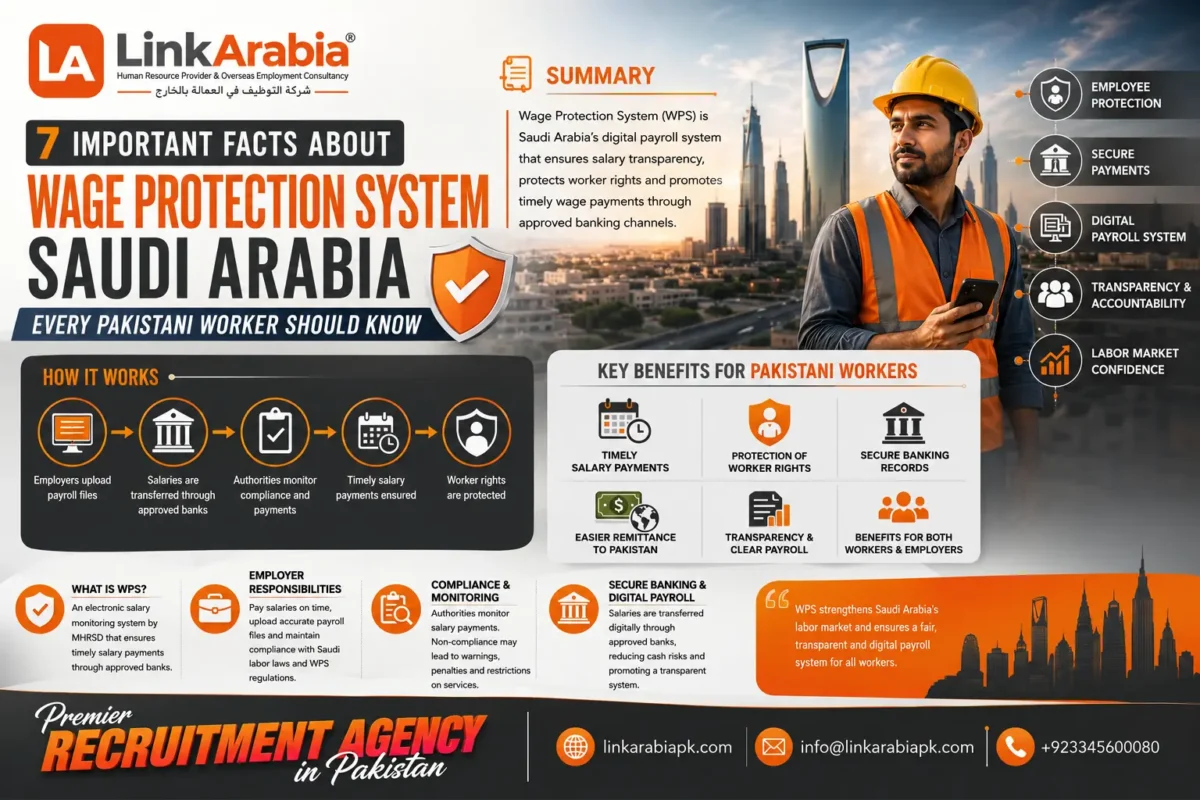
Wage Protection System Saudi Arabia (نظام حماية الأجور) has become one of the most important labor reforms introduced in the Kingdom to improve salary transparency and employee protection. The system plays a major role in monitoring whether workers receive their salaries on time and according to their employment contracts.
Saudi Arabia hosts millions of expatriate workers, including a large Pakistani workforce employed in construction, maintenance, logistics, hospitality, healthcare, transportation, and industrial sectors. For overseas Pakistani workers, salary protection and payment transparency are extremely important because delayed salaries can create financial pressure on families back home.
The Saudi government introduced the Wage Protection System to digitize payroll management and create better accountability between employers and employees. The system has significantly changed how companies process salaries.
This article explains everything about Wage Protection System Saudi Arabia, including how it works, why it was introduced, employer obligations, employee benefits, salary transfer methods, compliance requirements, penalties for violations, and its importance for Pakistani workers.
What is Wage Protection System Saudi Arabia?
The Wage Protection System Saudi Arabia is an electronic salary monitoring system implemented by the Saudi Ministry of Human Resources and Social Development (MHRSD) maktab al amal.
The system requires employers to transfer employee salaries through approved banking channels instead of cash payments. Salary information is submitted electronically through payroll files so authorities can verify whether workers are receiving wages correctly and on time.
The Wage Protection System is commonly known as WPS. It helps authorities monitor:
- Salary payment dates
- Salary amounts
- Delayed payments
- Missing salary transfers
- Contract compliance
- Payroll transparency
The system is connected with licensed Saudi banks and payroll service providers. Employers upload salary information regularly, and authorities review whether payments match employment agreements.
Official Information:
Why Was the Wage Protection System Introduced?
Before digital payroll systems became common, many workers faced salary delays or disputes. In some cases, workers were paid in cash without clear documentation.
Saudi Arabia introduced the Wage Protection System to improve labor market transparency and modernize salary management procedures.
The major objectives include:
1. Protecting Employee Rights
Workers can verify salary transfers through banks and payroll records. This creates more financial clarity.
2. Reducing Salary Disputes
Electronic salary documentation reduces misunderstandings between employers and employees.
3. Supporting Digital Transformation
Saudi Arabia is expanding digital governance across many sectors, including labor management and payroll processing.
4. Improving Employer Accountability
Companies are required to maintain organized payroll records and salary compliance.
5. Strengthening Labor Market Confidence
A transparent payroll system helps improve trust within the labor market for local and expatriate employees.
How Does Wage Protection System Saudi Arabia Work?
The process of Wage Protection System Saudi Arabia involves several digital payroll steps.
Step 1: Employee Bank Account Opening in Saudi Arabia
Employees receive salary accounts through approved banks or payroll cards.
Many expatriate workers in Saudi Arabia open salary accounts after obtaining:
- Iqama
- Employment contract
- Employer verification documents
Step 2: Salary Processing
Employers prepare monthly payroll data, including:
- Employee name
- Iqama number
- Salary amount
- Allowances
- Deductions
- Transfer date
Step 3: Wage File Submission
The employer uploads a salary protection file through approved systems connected with Saudi banks.
Step 4: Salary Verification
Authorities compare:
- Employment contract details
- Actual salary transferred
- Payment timing
Step 5: Compliance Monitoring
If salary delays or inconsistencies appear, the company may receive warnings or compliance notices.
Components of Wage Protection System Saudi Arabia
The system includes several important components.
Electronic Payroll File
The payroll file contains salary information for all employees.
Banking Integration
Saudi banks coordinate with payroll systems to process salary transfers.
Government Monitoring
Authorities monitor payroll compliance electronically.
Employee Salary Records
Workers can review salary deposits through banking applications and statements.
Benefits of Wage Protection System Saudi Arabia for Pakistani Workers
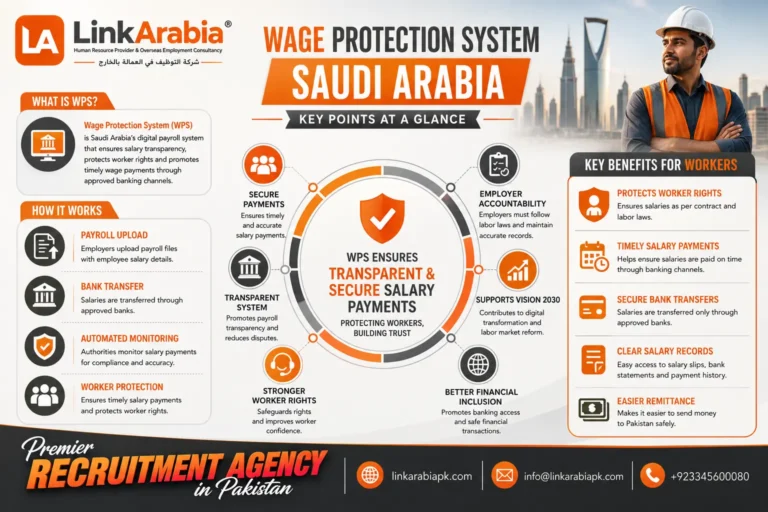
The Wage Protection System Saudi Arabia provides several practical benefits for Pakistani workers employed in the Kingdom.
1. Improved Salary Transparency
Workers can monitor whether salaries are deposited according to agreed timelines.
This reduces confusion regarding:
- Delayed payments
- Partial salary transfers
- Missing overtime payments
2. Banking History for Financial Use
Salary accounts help expatriates create banking records that may support:
- Remittance activities
- Financial documentation
- Banking services
3. Reduced Cash Handling Risks
Electronic salary transfers reduce risks associated with carrying cash.
4. Better Payroll Documentation
Workers can maintain salary records for:
- Visa processing
- Financial history
- Employment verification
- Future immigration purposes
5. Enhanced Labor Rights Awareness
Digital payroll systems encourage employees to understand salary structures and labor agreements.
6. Easier Salary Remittance to Pakistan
Many Pakistani workers send money home regularly. Banking salary systems simplify remittance transfers through legal financial channels.
Related resource:
Overseas Employment Guidelines – Ministry of Overseas Pakistanis and Human Resource Development
Employer Responsibilities Under Wage Protection System Saudi Arabia
Employers operating in Saudi Arabia must comply with payroll regulations.
Salary Payment Through Approved Channels
Cash salary payments may not satisfy payroll compliance requirements in many sectors.
Timely Salary Transfers
Companies are expected to process salaries according to employment agreements.
Maintaining Accurate Payroll Data
Employers should maintain organized employee records and payroll information.
Correct Wage File Submission
Incorrect payroll uploads may result in compliance issues.
Responding to Employee Complaints
Employers may need to clarify payroll discrepancies if they arise.
What Happens if Companies Do Not Comply?
Non-compliance with Wage Protection System Saudi Arabia may result in administrative actions.
Possible outcomes may include:
- Warning notices
- Administrative restrictions
- Delays in government services
- Compliance reviews
Regulations may change depending on labor policies and company categories.
Workers should always verify current regulations through official Saudi authorities.
Role of Saudi Banks in Wage Protection System
Saudi banks play an important role in payroll compliance.
Banks help:
- Open salary accounts
- Process payroll files
- Maintain salary transfer records
- Support electronic payroll systems
Popular banking institutions operating in Saudi Arabia include:
- Al Rajhi Bank
- Saudi National Bank
- Riyad Bank
Official Banking Resource:
Saudi Central Bank Payroll Information
Wage Protection System and Saudi Vision 2030
Saudi Arabia’s digital labor reforms align with broader modernization initiatives connected with Vision 2030.
The Wage Protection System contributes to:
- Digital transformation
- Labor market regulation
- Financial inclusion
- Payroll transparency
- Workforce modernization
Saudi Arabia continues to improve digital infrastructure across employment sectors.
Official Vision Resource:
Saudi Vision 2030
Importance of Financial Literacy for Overseas Workers
Financial literacy is becoming increasingly important for overseas workers.
Pakistani workers should understand:
- Salary breakdowns
- Banking charges
- Currency exchange rates
- Remittance methods
- Payroll deductions
Understanding these areas can help workers manage finances more effectively while abroad.
Role of Recruitment Agencies in Pakistan and Documentation Before Travel
Before traveling to Saudi Arabia, workers should verify:
- Employment contract details
- Salary structure
- Company information
- Visa category
- Job description
Workers should also ensure documentation is properly processed through the Ministry of Overseas Pakistanis and Human Resource Development.
Helpful resource:
Link Arabia Blog – Overseas Employment Insights
How WPS Improves Saudi Arabia’s Labor Market
The Wage Protection System Saudi Arabia supports broader labor market improvements.
Benefits include:
- Organized payroll structures
- Increased financial transparency
- Better workforce data management
- Reduced informal salary practices
- Enhanced labor regulation monitoring
The system also encourages companies to maintain stronger payroll discipline
Future of Wage Protection System Saudi Arabia
Saudi Arabia continues investing in digital labor reforms.
Future payroll systems may include:
- AI-based payroll monitoring
- Faster compliance reporting
- Expanded banking integration
- Enhanced worker self-service systems
- Mobile payroll access
As technology evolves, payroll systems are expected to become more automated and transparent.
Practical Tips for Pakistani Workers in Saudi Arabia
Here are some useful recommendations for overseas Pakistani workers.
Learn Basic Banking Procedures
Understanding ATM use, online banking, and salary transfers can help workers manage finances independently.
Save Salary Records
Maintain copies of:
- Bank statements
- Salary slips
- Transfer notifications
Avoid Informal Salary Arrangements
Workers should prefer documented salary systems connected with approved banking channels.
Stay Updated with Saudi Labor Law Rules
Saudi labor regulations may change periodically.
Workers should review official updates from:
- Saudi labor authorities
- Saudi banks
- Pakistani government overseas employment resources
Conclusion
The Wage Protection System Saudi Arabia has become an important part of Saudi Arabia’s modern labor management framework. The system promotes payroll transparency, salary monitoring, and electronic wage compliance for companies operating in the Kingdom.
For Pakistani workers, the system provides greater visibility regarding salary payments and banking records. It also supports more organized payroll management across industries employing expatriate workers.
Employers benefit through improved payroll documentation and digital salary management processes, while authorities gain better oversight of labor market compliance.
As Saudi Arabia continues expanding digital labor systems under Vision 2030 initiatives, the Wage Protection System is expected to remain a major component of payroll administration and workforce regulation.
Frequently Asked Questions (FAQs) (Maktab Al Amal)
1. What is Wage Protection System Saudi Arabia?
The Wage Protection System Saudi Arabia is an electronic payroll monitoring system that tracks salary payments through approved banking channels.
2. Is Wage Protection System mandatory in Saudi Arabia?
Many companies operating in Saudi Arabia are required to comply with wage protection regulations depending on labor policies and business classifications.
3. How are salaries transferred under WPS?
Salaries are generally transferred electronically through approved Saudi banks and payroll systems.
4. Can Pakistani workers check salary transfers?
Yes. Workers can verify salary deposits through banking applications, ATM receipts, and account statements.
5. Why was the Wage Protection System introduced?
The system was introduced to improve salary transparency, labor compliance, and payroll documentation.
6. What happens if salaries are delayed?
Authorities may review payroll compliance records and companies may face administrative actions depending on regulations.
7. Do workers need bank accounts in Saudi Arabia?
Most workers receive salary accounts or payroll cards for salary transfers.
8. Can salary disputes be resolved through payroll records?
Electronic payroll records may help support salary verification processes.
9. Does WPS benefit expatriate workers?
Yes. The system supports salary tracking, payroll transparency, and digital payment documentation.
10. Where can workers verify official labor information?
Workers should verify information through official Saudi government platforms and authorized labor resources.
⚠️ DISCLAIMER

The information provided in this article is intended for general informational purposes only. It does not constitute professional legal, financial, or career advice. While every effort has been made to ensure the accuracy of the information presented, the employment landscape, government regulations, and overseas labour market conditions are subject to change.

Readers are strongly encouraged to conduct their own independent research, consult with qualified professionals, and verify the credentials and licensing of any recruitment agency before engaging their services.

Always check with relevant government authorities, including the Ministry of Overseas Pakistanis and Human Resources Development (MOPHRD), for the most current regulations and approved agency listings.

linkarabiapk.com does not endorse, represent, or take responsibility for any specific recruitment agency or third-party service mentioned or implied in this content.